
Client Information: Mr. Zhang;
Shipping Route: Moving from Shanghai to Nagoya;
Case Summary: Mr. Zhang from Shanghai shipped furniture by sea to Nagoya, Japan.
Nagoya is a very important city in Japan, located roughly midway between Tokyo and Osaka, slightly closer to Osaka. It is the core city of the Nagoya metropolitan area, one of Japan's three major metropolitan areas, the fourth most populous city in Japan, and one of Japan's five major international trade ports. Its developed economy and unique cultural characteristics attract many people to immigrate and live there.
Mr. Zhang from Shanghai wanted to ship some furniture and other household items from China to Nagoya for continued use. Through a friend's introduction, he found "熙浦国际搬家" to handle this international relocation. Mr. Zhang did not have many items to ship—just some commonly used furniture such as beds, tables and chairs, and bookcases, along with some clothing, shoes, handicrafts, and books. The total volume was approximately 9 cubic meters, which could be shipped to Nagoya via LCL sea freight. Compared with other transportation methods, the cost was economical and cost-effective.
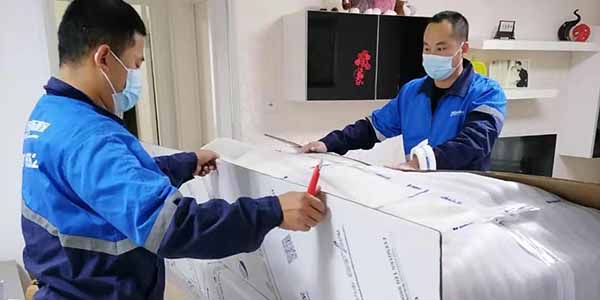
According to the established moving plan, "熙浦" staff went to Mr. Zhang's home with packing materials some time ago to pack the items to be shipped. Below is the packing scene from that day:
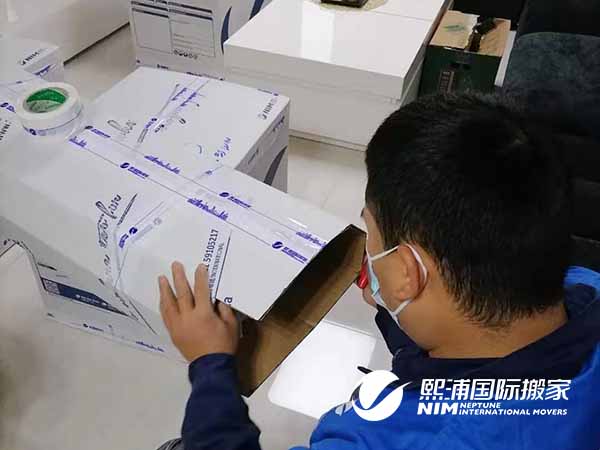
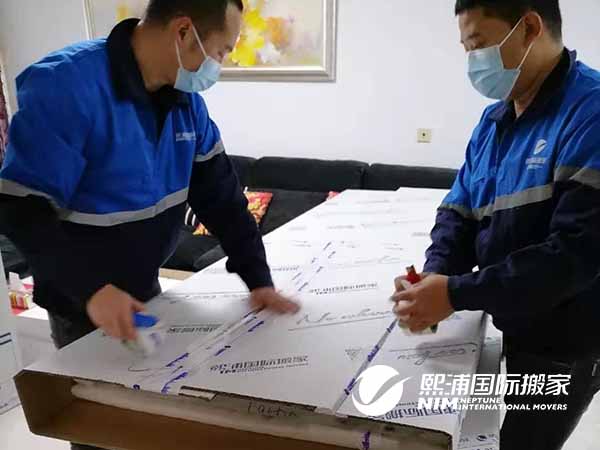
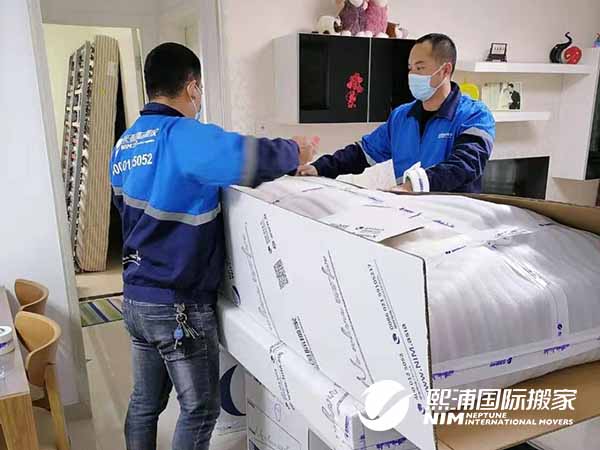
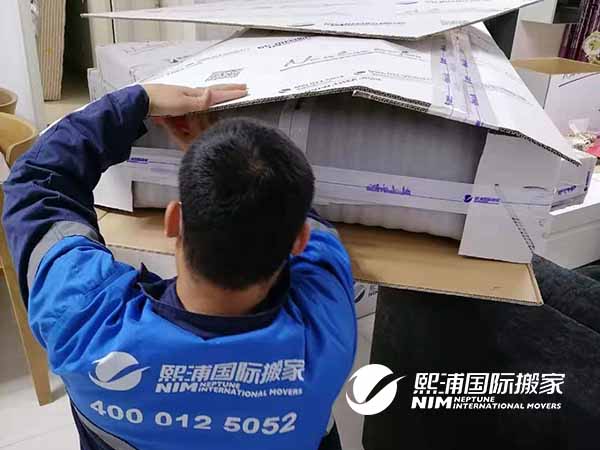
"熙浦" provides professional packing services according to client needs, using high-quality packing materials and following international moving packing standards:
1. First, wrap the furniture with a layer of white cotton paper. White cotton paper is soft in texture, heat-insulating and moisture-absorbing, and can effectively protect furniture surfaces;
2. Then wrap the furniture again with thickened pearl cotton. Pearl cotton is soft, has good cushioning performance and strong shock-absorbing effects, and is a widely used packing material;
3. For the outermost layer, use high-strength five-layer corrugated cardboard, cut and shaped according to the furniture's form, and seal edges and gaps with packing tape;
4. Finally, write the item name on the surface of the packed items, mark mirror frames and furniture with fragile surfaces, and attach fragile item labels.
After packing is completed, the items are transported to "熙浦"'s warehouse in Shanghai to await shipment. During this period, the packaging is reinforced again. Since Mr. Zhang is using LCL sea freight, his items need to share a full container with other people's belongings for shipment to Japan. This may take a long time, approximately 1 to 2 months. Once the items arrive in Japan and customs clearance is completed, they will be delivered to Mr. Zhang's new residence, placed back in position, and the packing waste will be removed and taken away. Thus, the sea move from Shanghai to Nagoya is successfully completed.
Notes for Moving to Nagoya, Japan
1. For sea shipping to Japan, choose FCL or LCL based on the volume of items you need to ship.
2. Items prohibited from entering Japan are specifically stipulated under the Customs Tariff Act and the Washington Convention. In addition to narcotics, firearms, and ammunition, there are other prohibited items that travelers need to know about.
(1) Counterfeit goods
Counterfeit goods include imitations of well-known branded products. If counterfeit goods are brought into the country without knowledge and discovered by customs, the items will be confiscated. In such cases, no further legal liability will be pursued. However, if brought in knowingly, it will constitute a criminal offense.
(2) Goods regulated by the Washington Convention
Items covered under the Washington Convention include the fur, leather products, and ivory products of precious animals. Fur products from felines such as tigers and leopards, and hides of amphibians such as crocodiles and lizards are restricted items. The above restrictions apply not only to finished products but also to the animals themselves. Even if confirmed as problem-free at the time of purchase, if customs determines the item is restricted, the holder must choose one of the following: 1) abandon it on the spot, 2) send it back at their own expense, or 3) pay a professional company to store it temporarily and apply for an import permit.
(3) Food, plants, and meat products (ham, sausage, etc.)
Fruits, plants, flower seeds, and meat products may not be brought into the country except for products sold at airports that have passed inspection. Fish products are exempt.
By quote form, phone, email or WeChat — we reply promptly Get a Quote